

With the rapid evolution of Information Technology (IT), the way we buy, sell, and manage properties is transforming in ways that were unimaginable a decade ago. From online listings to smart home technologies, IT is revolutionizing the real estate sector, bringing enhanced value to both buyers and sellers. In this blog, we’ll dive into how these advancements are reshaping the real estate industry.
1.The Rise of Digital Listings
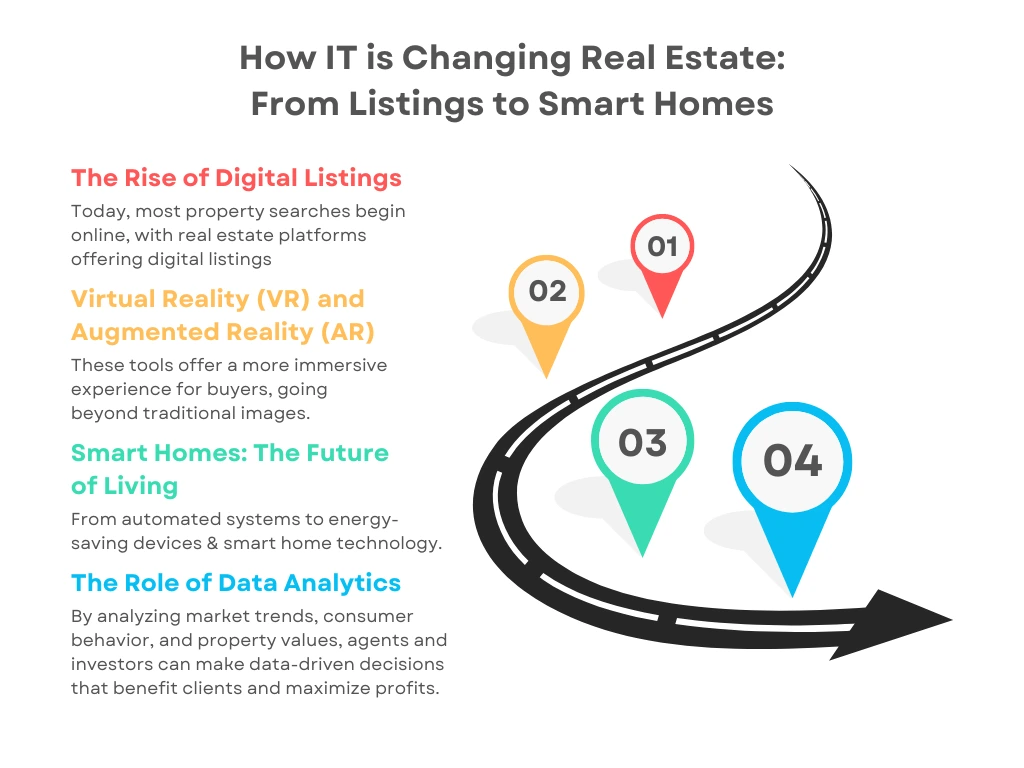
Gone are the days of flipping through newspapers to find your dream home. Today, most property searches begin online, with real estate platforms offering digital listings that allow users to filter properties based on their preferences, budget, and location. This digital transformation has made it easier for buyers to browse properties, view high-quality images, and even take virtual tours without leaving their homes.
- User-Friendly Platforms: Modern real estate websites and mobile apps focus on user experience. Advanced search filters, comparison tools, and integrated mapping systems enhance the property search experience for buyers.
- Social Media Integration: Real estate agents are increasingly utilizing platforms like Instagram and Facebook to showcase properties, engage potential buyers, and drive traffic to their digital listings. Social media plays a key role in increasing visibility for real estate deals.
2. Virtual Reality (VR) and Augmented Reality (AR)
One of the most significant advancements in real estate tech is the use of Virtual Reality (VR) and Augmented Reality (AR). These tools offer a more immersive experience for buyers, going beyond traditional images and giving them a realistic feel of the property.
- Virtual Tours: With 3D virtual tours, potential buyers can walk through a property and get a feel for its layout before scheduling an in-person visit. This is a game-changer for remote buyers or those with packed schedules.
- AR for Renovations: Augmented Reality helps buyers visualize changes without physically altering a space. For example, they can see how new furniture or paint would look, helping them plan renovations or redesigns in real-time.
3. Smart Homes: The Future of Living
The concept of smart homes is no longer a distant dream. From automated systems to energy-saving devices, smart home technology is quickly becoming a deciding factor for both buyers and developers.
- Automated Systems: Buyers now look for homes with smart thermostats, security systems, and other automated solutions. These tech-driven homes offer convenience and remote control capabilities, streamlining daily living.
- Energy Efficiency: Smart devices like smart meters and automated lighting systems don’t just add convenience—they also contribute to energy savings. Homes that feature these energy-efficient technologies are becoming more attractive, especially as sustainability trends grow.
4. The Role of Data Analytics
Data analytics is now playing a pivotal role in real estate. By analyzing market trends, consumer behavior, and property values, agents and investors can make data-driven decisions that benefit clients and maximize profits.
- Market Insights: Real estate agents use data to price properties, predict trends, and understand buyer preferences. This helps them offer tailored services and gain a competitive edge.
- Predictive Analytics: By utilizing predictive algorithms, real estate investors can determine when to buy or sell, making more informed financial decisions.
Conclusion
As we move further into the digital age, the real estate industry will continue to embrace IT solutions that enhance the buying, selling, and management of properties. From streamlined digital listings to smart home technologies, IT is fundamentally reshaping how we interact with real estate.
Ready to transform your real estate experience?
At Tech91.digital, we specialize in delivering cutting-edge IT solutions tailored to the real estate sector. Learn more about how our services can help modernize your real estate business.


